How can technology help us observe pollinators?
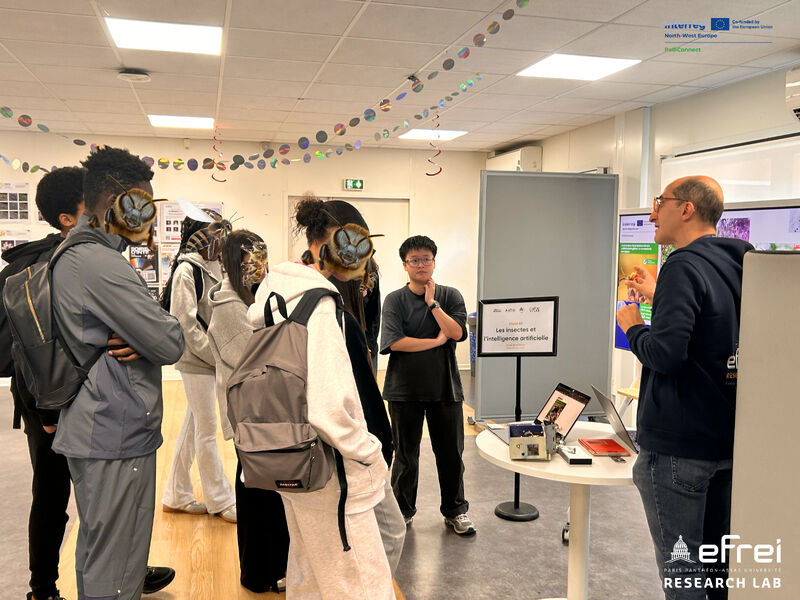
On 7 October 2026, three classes of middle school students explored this question at EFREI during the Fête de la Science, France’s nationwide festival bringing science and research closer to the public. PolliConnect was among the research projects presented, offering students a hands-on introduction to the connection between digital technology and biodiversity. LinkedIn
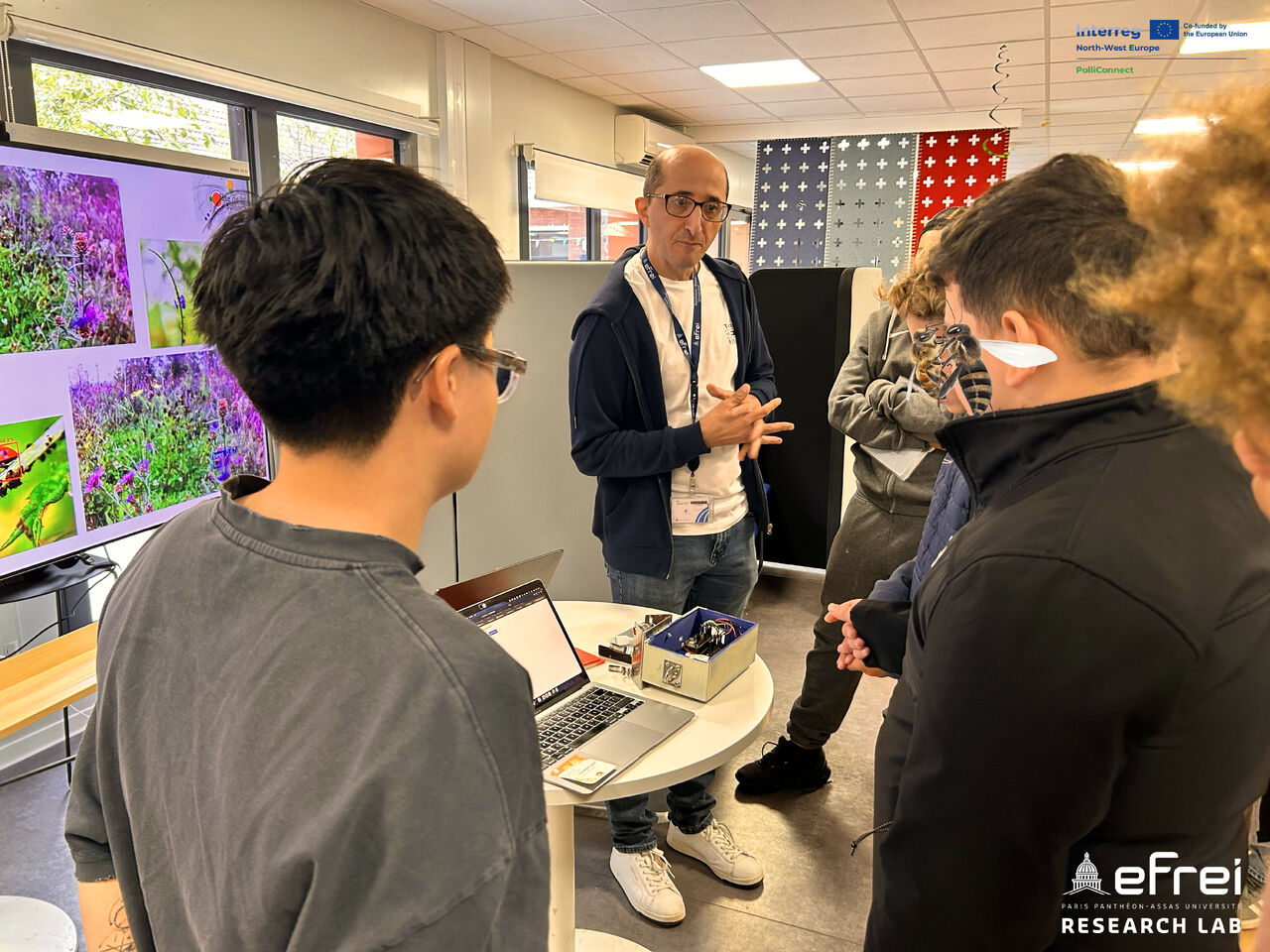
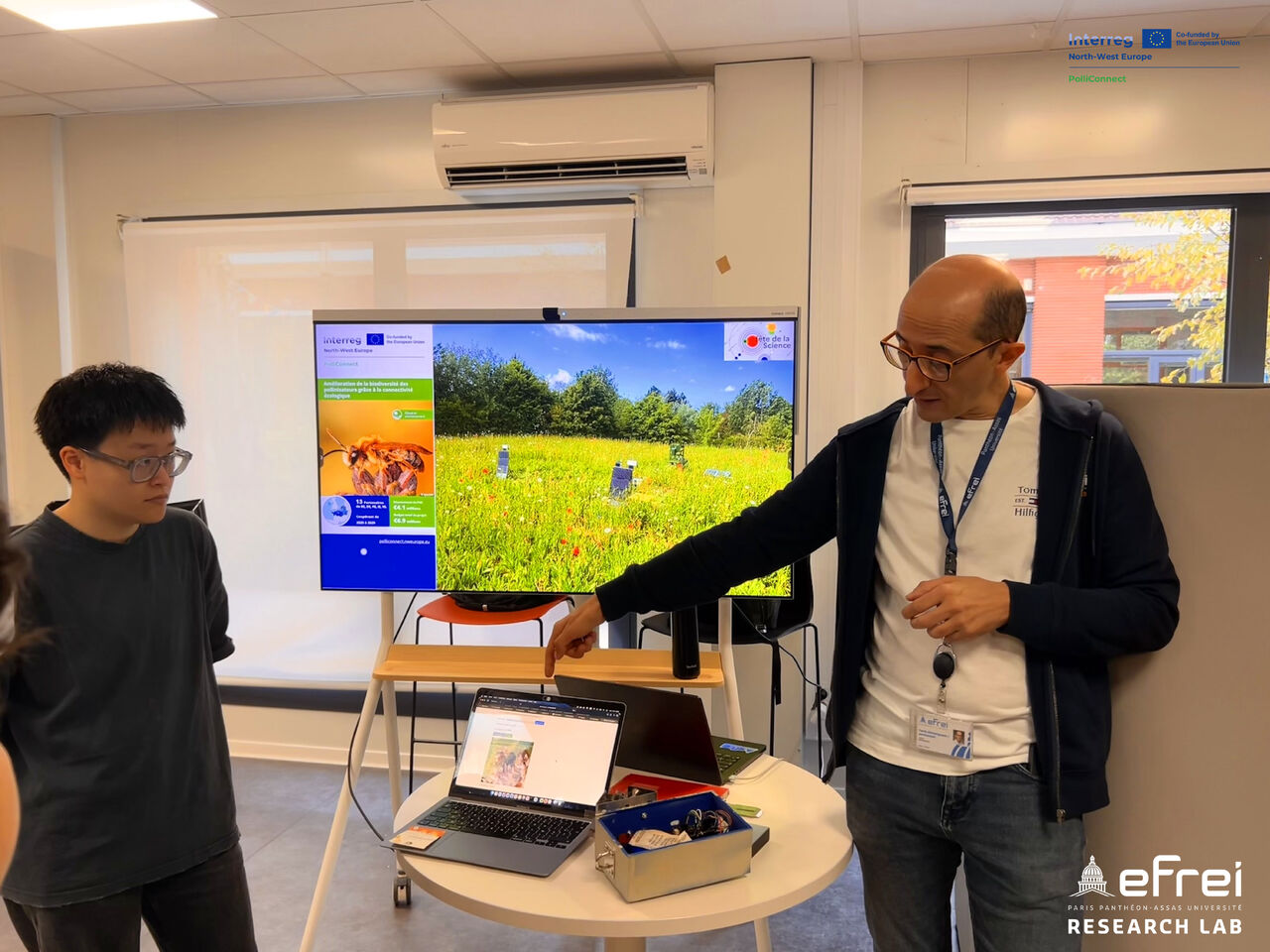
During the morning session, lecturer and researcher Lamine Bougueroua and PhD student Dung Nguyen introduced the project’s work, with a particular focus on camera traps for pollinator monitoring. Students had the opportunity to observe and handle the devices, discovering how researchers use cameras to study insects visiting flowers.
The cameras combine image capture with computer vision—technology that helps computers recognise and interpret visual information—to support the detection and identification of insects. Alongside these monitoring tools, EFREI is developing systems to store, analyse and visualise the data collected. The aim is to provide useful evidence that helps local stakeholders assess and adapt their management of natural spaces. LinkedIn
Monitoring helps build the evidence needed to understand whether these approaches are making a difference. The students were actively engaged, asking questions about both pollinators and the technologies behind the cameras. Their curiosity turned the demonstration into a lively exchange about how digital tools can contribute to biodiversity observation and scientific research.
Thank you to Lamine, Dung and the whole EFREI Research Lab team for bringing PolliConnect’s outputs to younger audiences, and to the students for their enthusiasm and thoughtful questions. Follow them in LinkedIn