Earlier this week, Tine Ketelaars (Provincie West-Vlaanderen) joined Levi Aerts (Vlaamse Landmaatschappij) and Stephanie Martens (Provincie West-Vlaanderen) as part of a delegation from the Interreg North-West Europe (NWE) projects #Polliconnect and Pollinate Interreg EU. Together with colleagues from Agentschap Wegen en Verkeer, Departement Omgeving, Departement Mobiliteit en Openbare Werken, De Werkvennootschap, De Vlaamse Waterweg nv, Inverde, Agentschap voor Natuur en Bos, and INBO (Research Institute for Nature and Forest - Instituut voor Natuur- en Bosonderzoek) , we sat around the same table to talk openly about a deceptively simple question: why is ecological mowing still so difficult to implement at scale?
What became clear very quickly is that the bottleneck is not a lack of goodwill. There is real ambition across practitioners, administrations and agencies to make roadside and verge management work better for biodiversity. Yet between intention and implementation, a mix of barriers keeps returning. Budget and cost clarity came up again and again. Ecological mowing can require different planning, different follow-up, and sometimes different equipment or contracts. When the costs are unclear, or when budgets are already under pressure, it becomes hard to invest in ecological mowing, let alone in the training that contractors and field teams need to apply it consistently. Perception also matters more than we sometimes admit. Many citizens still expect roadside vegetation to look uniformly “neat”. In that context, ecological mowing can be perceived as messy, or as something “nice to have” rather than essential infrastructure management. That perception can put pressure on road managers, local decision-makers, and contractors—especially when complaints arrive faster than compliments. Then there are the practical challenges. Contracts are often designed for standardised routines, and machinery and work planning are not always easy to adapt. Safety constraints along roads, the presence of invasive species, and the added complexity of monitoring all influence what is feasible on the ground. Finally, several participants highlighted a persistent gap: clear, accessible knowledge and guidance. Authorities and contractors need shared reference points on what creates ecological value in verges, how to measure it, and how to communicate it.
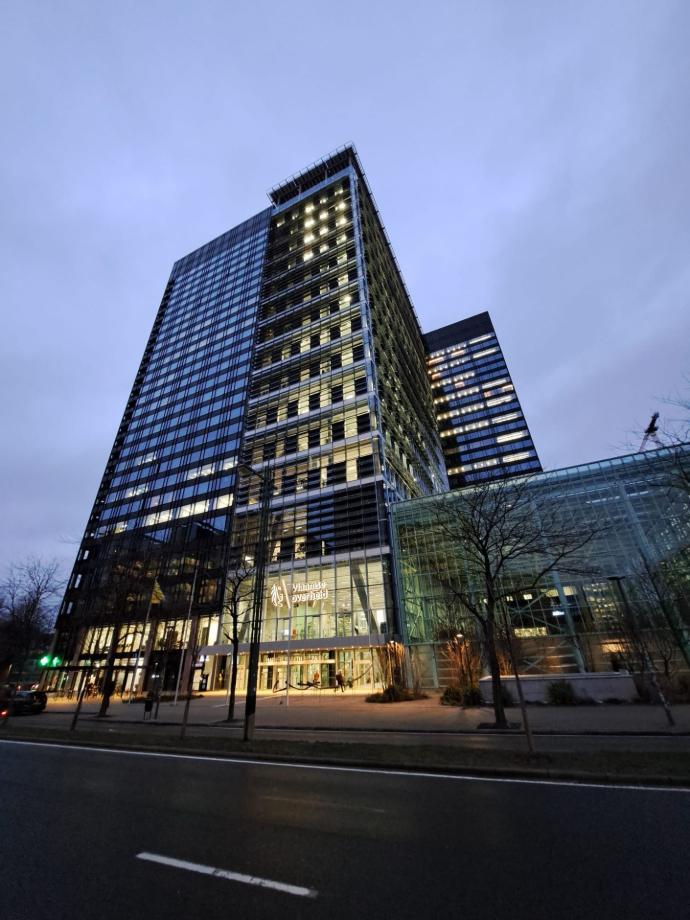
Workgroup experts on ecological management in Brussels
We asked them about the main thresholds of ecological management.
The encouraging part of the workshop was that the discussion did not stop at the problem list. Stakeholders also aligned on what is needed to move forward: a long-term policy vision for ecological green management, stable and dedicated funding, and stronger investment in knowledge, training and communication. With the right support structure, ecological mowing can become the norm rather than the exception.
This is exactly where #Polliconnect aims to contribute. PolliConnect - “Pollinator biodiversity enhancement through ecological connectivity”, an Interreg NWE project that brings land managers, farmers and scientists together to reconnect habitats for bees, butterflies and other wild pollinators across North-West Europe. The project has activities planned in Belgium, Ireland, France, Germany and the Netherlands. Beyond policy learning, PolliConnect also helps translate ecological principles into workable techniques. One example is meandering (or “sinus”) mowing. Instead of cutting in straight blocks, managers mow gently winding paths and only later mow adjacent areas, while leaving strips of vegetation temporarily or permanently standing. The result is a fine-grained mosaic of short, tall and older grass that provides nectar resources, nesting opportunities and winter refuge throughout the season. Field experience and recent studies in Flemish grasslands show strong biodiversity gains: after three mowing seasons, bee and butterfly diversity metrics can increase substantially at site level (reported up to around 40% within three years), alongside longer flowering periods and stronger plant–pollinator interactions. Importantly, broader European evidence also supports the need for context-sensitive mowing choices. A large review of European studies comparing mowing frequencies found that outcomes for flora and fauna are often more similar than expected across different mowing regimes, with small average differences, but with effects depending on habitat conditions such as site productivity. That message matters for practice: if budgets are limited, it becomes even more important to match mowing intensity and timing to local ecological goals, rather than relying on one-size-fits-all routines. Taken together, the workshop reinforced a simple conclusion. Ecological mowing is not a niche experiment anymore; it is a realistic, evidence-informed approach that can be mainstreamed, if we remove the barriers that keep it from scaling.
That means policy clarity, reliable financing, better contract structures, practical training, and communication that helps the public understand what “good management” looks like when the goal is biodiversity.
#EcologicalMowing, #Biodiversity, #Pollinators, #GreenManagement, #PolicyLearning