Levi Aerts from the Flemish Land Agency at Natuur Futuur
How can Europe monitor pollinators on the scale required by the Nature Restoration Regulation? This question formed the starting point of a presentation by Levi Aerts of the Flemish Land Agency at the recent Natuur Futuur event organised by the Agency for Nature and Forest.
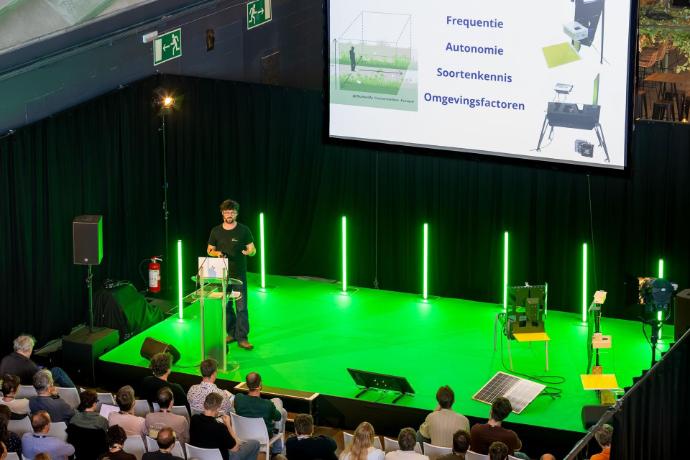
The Nature Restoration Regulation requires Member States not only to restore biodiversity, but also to demonstrate that restoration measures are effective. For pollinators, this creates a significant monitoring challenge. Traditional monitoring methods based on expert field observations remain the scientific reference, but they are time-consuming, require specialist expertise and can be difficult to scale across large monitoring networks.
As monitoring obligations increase across Europe, projects such as PolliConnect are exploring innovative approaches that can help collect biodiversity data more efficiently while maintaining scientific credibility.
Two innovative camera systems
Within PolliConnect, project partners are testing two AI-supported camera systems designed to automate parts of the monitoring process.
DIOPSIS
The first is the Diopsis camera, developed by Naturalis and FaunaBit. This mature camera platform has already been used in various research projects and demonstrates that automated insect monitoring is technically feasible
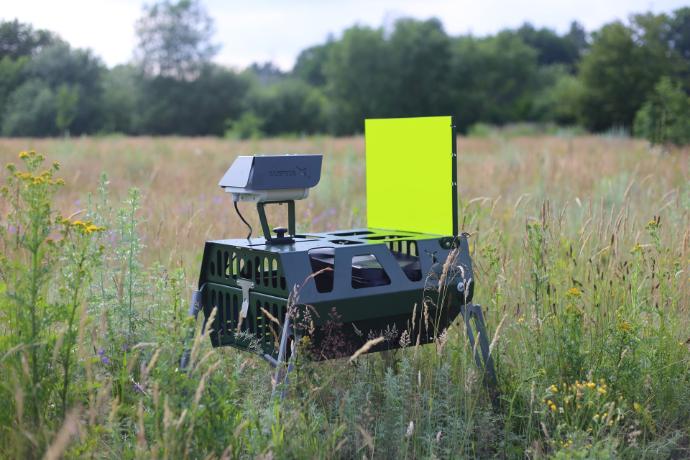
.
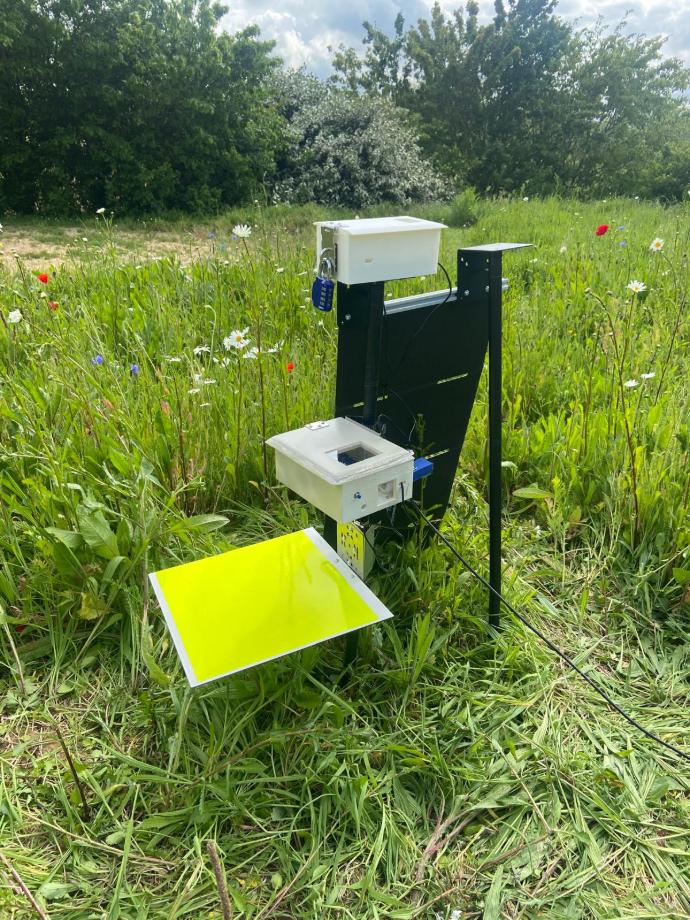
PolliCam
The second is PolliCam, developed by EFREI Paris. PolliCam follows a similar philosophy but uses affordable, largely open-source components to create a monitoring system that is easier to deploy and potentially accessible to a wider range of users.
Both systems continuously collect images of insects in the field. AI models then analyse these images in an attempt to identify the insects observed.
AI as a complement to scientific monitoring
Within PolliConnect, AI-supported cameras are being tested as a complement to scientific monitoring rather than a replacement for it. While experienced entomologists remain essential for species identification, validation and ecological interpretation, camera systems can collect large volumes of observations continuously throughout an entire season and substantially reduce field effort.
The project also highlighted current challenges. Identification accuracy varies between taxonomic groups, image quality remains critical and the availability of reference datasets strongly influences model performance.
PolliConnect combines camera observations with scientific monitoring results and environmental variables such as habitat characteristics and weather conditions. Together, these data streams provide a richer understanding of pollinator activity and biodiversity trends, creating new opportunities to evaluate restoration measures and support evidence-based nature management.
Growing interest from practitioners
The presentation sparked valuable discussions with researchers, policymakers, nature managers, and other attendees. In particular, there was strong interest in the feasibility of small-scale deployments and the potential of AI-supported monitoring as a practical tool for biodiversity assessment.
Interested in learning more about Diopsis, PolliCam or the wider PolliConnect project? We welcome discussions on collaboration opportunities, pilot deployments and future applications of innovative pollinator monitoring technologies. Feel free to get in touch with the project team.